
Why Is My Website Traffic Dropping Even After SEO? (Common Reasons Explained)
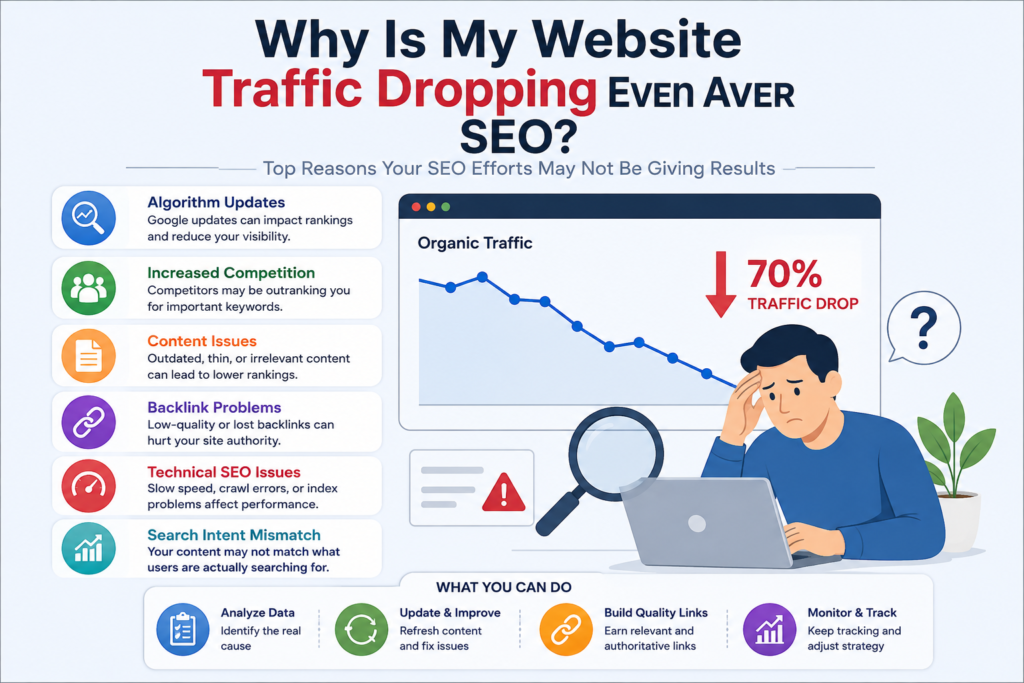
You did everything right. You optimized your pages, built backlinks, published content consistently, and your traffic was climbing. Then, without warning, it dropped.
This is one of the most common concerns businesses using digital marketing in Coimbatore bring to us: “My SEO was working. Now it’s not what changed?” The truth is, a traffic drop after SEO is rarely caused by one single thing. It’s usually a combination of factors that need to be diagnosed properly before you can fix them. This guide walks through the most common reasons behind a sudden or gradual ranking drop, and exactly how to check for each one.
Quick Answer
Website traffic can drop after SEO due to Google algorithm updates, lost backlinks, technical errors, content becoming outdated, increased competition, or accidental de-indexing. The fix starts with a full SEO audit to identify which factor changed, then correcting it before rankings recover further.
Is a Sudden Traffic Drop Normal After SEO?
Not all traffic dips are cause for alarm. Search traffic naturally fluctuates day to day, and seasonal industries often see dips that have nothing to do with SEO performance. A genuine problem usually looks like a sustained drop of 20% or more over several days or weeks, especially if it lines up with a specific keyword or page losing its ranking position. If your numbers are just wobbling slightly week to week, it’s likely normal variation, not a red flag.
Common Reasons Your Website Traffic Is Dropping
1. A Google Algorithm Update Hit Your Site
Google rolls out updates throughout the year; some target overall content quality, others target specific issues like spam or unhelpful content. If your drop coincides with a known update rollout, that’s often the cause. You can check Google’s own Search Central blog for confirmed update dates before assuming this is the reason.
2. You Lost Backlinks
Backlinks act as trust signals. If a website linking to you removed the link, went offline, or got penalized itself, your authority and your rankings can drop as a result. This is easy to check using Google Search Console’s Links report or a backlink-tracking tool.
3. Technical SEO Issues (Broken Pages, Slow Speed, Indexing Errors)
A recent website update, plugin change, or migration can quietly break things: broken redirects, slow-loading pages, or an accidental “noindex” tag added to important pages. Running a basic SEO audit checklist covering crawl errors, Core Web Vitals, and indexing status usually surfaces this quickly.
4. Your Content Became Outdated or Thin
Search rankings aren’t permanent. If a competitor updates their page with fresher, more detailed information while yours stays static, Google may start favoring theirs instead. This kind of content decay is one of the most overlooked reasons organic traffic decreases: nothing broke; your content just got outpaced.
5. Increased Competition in Your Niche or City
More businesses are investing in SEO than ever. If new competitors start actively targeting the same keywords for example, other agencies competing for “digital marketing in Coimbatore” your existing rankings can get pushed down even if nothing about your site changed.
6. Accidental De-Indexing or Robots.txt Blocking
Sometimes a small technical change, a misconfigured robots.txt file, an accidental noindex tag, or a broken sitemap can block Google from crawling or indexing your pages entirely. This is a quick check in Search Console’s Coverage report, and one of the more urgent fixes on this list.
7. Seasonal or Industry-Specific Search Demand Changes
Not every drop is an SEO problem. Some industries naturally see less search interest during certain months. Comparing your traffic pattern to the same period last year can help you tell demand-based dips apart from genuine ranking losses.
How to Diagnose a Traffic Drop (Step-by-Step)
- Check Google Search Console for manual actions or coverage errors
- Compare the drop date with confirmed Google algorithm update rollouts
- Review your top pages for lost rankings vs. lost impressions
- Audit your backlink profile for recently lost referring domains
- Run a technical crawl to catch broken pages, redirects, or indexing issues
- Review recent website or CMS changes: theme updates, plugin changes, or migrations
Our Search Engine Optimization services include this exact audit process for businesses trying to figure out what changed.
Google Ranking Dropped Suddenly? Here's What to Check First
If the drop happened fast, not gradually over weeks, prioritize these checks in order: manual actions in Search Console, accidental de-indexing, and recent site changes (these tend to cause sudden drops, unlike content decay or competition, which are usually gradual).
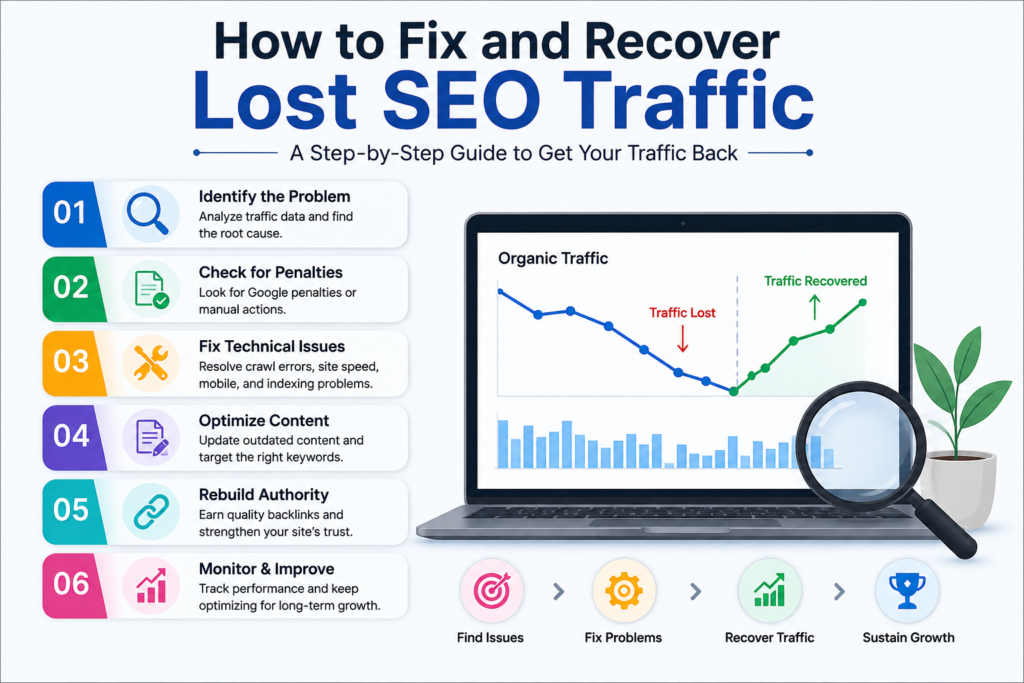
How to Fix and Recover Lost SEO Traffic
Fixing technical errors: Resolve crawl errors, fix broken redirects, and remove any accidental noindex tags first; these are often the fastest wins.
Refreshing outdated content: Update statistics, expand thin sections, and realign pages with what’s currently ranking well for that keyword.
Rebuilding lost backlinks: Reach out to relevant, reputable sites for replacement links, and focus on earning a few strong links rather than many weak ones.
Realigning with search intent: Sometimes Google’s understanding of a keyword’s intent shifts. Check what’s currently ranking on page one and see if your content still matches what users expect to find.
For a deeper look at sustainable ranking strategies, see our guide on how to improve your Google rankings without paid ads. And if your site never ranked well to begin with, that’s a different issue covered in our post on why your website isn’t ranking on Google.
Frequently Asked Questions
Why did my website traffic suddenly drop?
A sudden drop is usually caused by a technical issue (broken pages, accidental de-indexing), a Google algorithm update, or a manual action. Check Search Console first to narrow it down.
How long does it take to recover from a Google ranking drop?
Recovery time varies; technical fixes can show results within days to weeks, while algorithm-related or content-quality drops may take longer as Google re-evaluates your site.
Can a website recover after losing rankings?
Yes, most traffic drops are recoverable once the underlying cause is identified and fixed, whether that’s a technical error, outdated content, or lost backlinks.
Does changing my website design affect SEO rankings?
It can, if the redesign changes URLs, removes content, or breaks technical elements like redirects and page speed. Always plan SEO continuity into any redesign.
How often should I run an SEO audit?
A full audit every 3–6 months is a good baseline, with quicker checks whenever you notice a noticeable traffic or ranking change.
When to Get Professional Help
Some issues are straightforward to fix yourself: a broken redirect, a missing meta tag. Others, like manual penalties, large-scale de-indexing, or drops following a major migration, are harder to diagnose without deeper technical access and experience. If you’ve gone through the checklist above and still can’t pinpoint the cause, that’s usually the sign to bring in a specialist.
Final Thoughts
A traffic drop after SEO can feel discouraging, especially when things were working before. But in almost every case, the cause is identifiable: an algorithm shift, a technical issue, content that’s fallen behind, or new competition, and once it’s identified, it’s fixable. The key is diagnosing before you start making changes, so you’re fixing the actual problem instead of guessing.
Seeing a drop in your website traffic? Get a free SEO audit from Byzero Technologies and find out exactly what’s holding your rankings back. Contact us today.
- The Importance of Responsive Design by a Web Design Company
- Why Mobile Marketing is the Future of Digital Marketing
- The Evolution of Influencer Marketing: From Popularity to Authenticity
- How Social Media Platforms and Websites are Evolving to Support Direct Purchases
- Discover the Rise of Voice Search and Optimizing Content for Smart Assistants
- AI-Powered Marketing: The Next Frontier of Personalized Customer Experiences
- How to Use Content Marketing to Boost Brand Awareness
- The Role of Email Marketing in 2024
- Is Social Media Marketing Better for B2C or B2B Businesses?
- How to Use Content Marketing to Boost Brand Awareness
- Local SEO vs. Global SEO: Which One Is Right for Your Business?
- Social Commerce: How to Sell Directly on Social Media Platforms
- The Impact of Short-Form Video Content on Social Media Marketing
- How AI is Transforming Digital Marketing: Key Strategies for 2024
- How to Create a High-Converting Digital Marketing Funnel in 2024
- The Power of Video Marketing: How to Create Videos That Drive Results
- SEO vs. SEM: Which Strategy is Right for Your Business?
- Top Digital Marketing Trends to Watch in 2024
- White Hat vs. Black Hat SEO: The Ethics of Backlink Building
- The Impact of Social Media on Backlink Building
- 6 Benefits of Knowing Digital Marketing Effectively
- How to Build an Effective Social Media Marketing Plan from Scratch
- 6 Ways to Get Noticed on Instagram
- The Rise of Micro-Influencers in Digital Marketing
- Transforming Social Media Platforms into Sales Channels: A Digital Marketer’s Guide
- Tips and tricks to know how digital marketers optimize ads
- How Coimbatore Companies Can Perform Technical SEO Audits of Websites
- SEO Secrets for Driving Coimbatore Brands to the Top of Search Results
- The Role of Color Psychology in Website Branding
- Key Elements Every Brand Website Should Have
- Guide to Refresh Your Brand’s Online Presence Effectively
- Making Your Website Google-Friendly in 2024
- Choosing the Right Website Design Approach for Coimbatore Businesses
- Paid Marketing vs. Organic Digital Marketing
- Implementing Digital Marketing Tactics for MSME Growth
- How to Choose the Right Digital Marketing Agency in Coimbatore
- Insights into Effective E-commerce Design Principles
- Understand the psychology of design and how it influences consumer behavior online.
- Understanding the Power of Engagement Metrics in Google Ads
- A Comprehensive Guide to Google Ads for Small Businesses
- Meta Boosts vs. Meta Campaigns: What’s the difference?
- Tips to Converting Your Targeted Audience to Followers
- Tricks for Digital Marketing Success
- How to Develop a Digital Marketing Strategy
- Instagram Marketing Tips for Businesses
- Tips to Grow Your Website Traffic
- How to get your business the first page on google
- Why blog? The benefits of blogging in business and marketing.
- The Rise of Social Commerce and Its Influence on Branding Strategies in the Digital Age
- Tactics To Get Great Customer Reviews
- Scaling Your Startup: Digital Marketing Strategies for Growth
- The Power of Logo Redesign: How Brands are Boosting Their Future Prospects.
- Mastering SEO for Business: Essential Strategies to Drive Traffic
- Role of User Experience (UX) in Effective Web Design
- Role of Branding in Building Trust with Customers
- Future of Web Design: Innovative Technologies and Trends
- Importance of Website Speed in User Experience and SEO
- The Role of Typography in Effective Web
- How to Develop a Brand Voice and Tone as a Web Designer
- Brand Voice and Web Designer…
- Latest Web Design Trends to Follow in 2023
- How to Use Social Media to Build Your Brand
- Importance of Brand Storytelling in Building Emotional Connections with Customers
- Benefits of Consistency in Branding Across All Marketing Channels
- Do logos, logotypes, and symbols that classifies a company?
- Future of Branding in a Digital World: Trends and Predictions
- Role of Branding in Attracting High-Value Clients
- Importance of Responsive Web Design for Mobile Devices.
- Building a Brand Strategy that Aligns with Your Business Goals
- Mental Illness Among Social Media Pros
- Incorporating Ethical Principles into Logo Design for Business
- Understanding the Importance of Content Marketing in the Digital Age